
400+ Hour Six-Month Foundation
More than 400 hours of personal practice, study and practical apprenticeship, with weekend seminars roughly every second week and continuous participation in the Mysore programme from day one.
AYF Assisting Academy
A long-form pathway in Ashtanga practice, study, observation, assisting and teaching. Beginning 13 February 2027 at Astanga Yoga Studio Copenhagen.
Express your interestThe Academy is an apprenticeship in the teaching Mysore method, combining personal practice, study and practical experience in the Mysore room. Participants begin by observing and, as their understanding and competence develop, gradually take on more assisting and teaching responsibility.
Your progression through the programme reflects your commitment and consistency, the development of your personal practice, the experience you gain, and your demonstrated ability to learn, apply and develop your skills.
400+ Hour Apprenticeship Programme
Over the six-month course, participants will typically accumulate more than 400 hours of personal practice, study and practical apprenticeship in the Mysore room.
The seminars provide the knowledge.
The Mysore room provides the apprenticeship.
The idea behind the Academy
Teaching Mysore-style Ashtanga is learned through personal practice, study, observation, assisting experienced teachers and working directly with students. Just as students learn Mysore through repeated practice, teachers learn to teach it through apprenticeship.
The Academy therefore combines two things throughout the programme: structured seminars for study and practical exploration, and regular time in the Mysore room, where participants observe teaching and gradually begin to apply what they are learning.
The seminars give participants a language for what they are doing. Personal practice and work in the Mysore room turn that knowledge into experience.
The Mysore method
Mysore practice is built on repetition. As the sequence becomes familiar, less attention is needed simply to remember what comes next, leaving more room to notice breath, rhythm, effort, stability, concentration and habitual patterns.
Over time, the practice becomes less dependent on external instruction and more directly experienced by the practitioner.
A guided class can give you an experience.
Mysore gradually teaches you how to practise.
Responsibility gradually shifts toward the practitioner. Understanding that process is fundamental to teaching the Mysore method well.
The educational progression
These six stages describe the overall direction of the Academy. They overlap, and progression depends on each participant’s practice, experience and readiness.
A regular, established personal practice as the foundation on which everything else is built.
Seminars on method, anatomy, philosophy, language and teaching.
Learning to see practitioners, bodies and teaching decisions in the Mysore room.
Working with real practitioners, especially beginners: teaching sequence, demonstrating and explaining postures, and gradually developing communication, judgement and hands-on assisting skills.
Responsibility for practitioners and sessions, with a senior teacher present.
Full responsibility for a Mysore room, when readiness has been demonstrated.
Responsibility grows with competence, not simply with time. Participants progress individually, and some will spend longer observing before taking on practical responsibility.
Programme structure
A six-month Foundation that everyone begins with, followed by an optional twelve-month Extended Apprenticeship for those who are ready to continue.
More than 400 hours of personal practice, study and practical apprenticeship, with weekend seminars roughly every second week and continuous participation in the Mysore programme from day one.
Twelve further months for those who show sufficient commitment, maturity, practice and teaching potential, with progressively greater responsibility.
Practice, study, observation, assisting, supervised teaching and independent teaching, in an order shaped by the individual, not the calendar.
Stage one, February–June 2027
Regular personal Mysore practice, weekend seminars, and continuous, progressively active participation in the Mysore programme.
The Foundation brings together weekend seminars, regular personal Mysore practice and practical participation in the studio’s Mysore programme. It includes:
The emphasis is on understanding how the Mysore method functions as a system of individual learning and transmission, not simply on learning how to lead students through a predetermined sequence.
A note on the series
The programme works with the Ashtanga series and the underlying principles of the Ashtanga method as a whole. Participants study and learn to teach from the practice they have personally established. In general, this means working only with postures up to the point they have reached in their own practice, whether in Primary, Intermediate or a later series.
The principle is simple: you first learn and understand a posture through your own practice before you are qualified to guide others in it. The Academy therefore does not teach advanced material simply for the purpose of teaching it to others.
Teaching and assisting responsibilities develop accordingly and remain appropriate to each participant’s experience, practice and demonstrated competence throughout the programme.
February–June 2027
Saturdays and Sundays, 12:30–16:00.
Foundation curriculum
The ten seminar weekends form a gradual progression rather than ten separate subjects. The programme begins with the practice, the Mysore method and how to introduce and develop a practice for a beginner. From there, participants quickly begin working with each other and gradually enter the Mysore room. Observation, communication, guidance, assisting and individualisation develop together throughout the programme, with increasing depth and responsibility. The curriculum themes overlap throughout the Foundation and are revisited as participants gain practical experience. The weekend headings indicate the main emphasis of each seminar rather than subjects that are studied in isolation.
What distinguishes Mysore-style teaching from guided classes: personal practice, memorisation, repetition, independence, individual progression and the relationship between teacher and practitioner. Particular attention is given to repetition as a method of learning: as the sequence becomes familiar, the practitioner becomes less dependent on external instruction and increasingly able to turn attention inward toward breath, movement, concentration, awareness and the subtler dimensions of the practice.
Structure and logic of the Ashtanga series: relationships between postures and between series, breath, bandha, drishti, vinyasa, sequencing and progressive learning. The structure is studied not only as a sequence of physical postures, but as a framework that supports concentration, awareness and the inward direction of attention. Study reflects each participant's established practice, understanding and experience.
Observation as one of the fundamental skills of teaching: learning to see individual anatomy, proportions, mobility, strength, experience, age and practice history, as well as differences in body awareness, attention, behaviour and ways of learning. Observation includes learning to recognise what kind of guidance may help a practitioner become more present, aware and independent in their own practice.
Applied anatomy of the spine, shoulders, hips, knees, ankles and wrists: load, stability, mobility, movement mechanics and sustainable long-term practice. Anatomy and movement are studied as tools for understanding the individual practitioner, not as ends in themselves, allowing physical guidance to support rather than distract from awareness and concentration.
How to preserve the intention and function of a posture while adapting its expression to the individual practitioner. Participants learn to work intelligently with anatomical differences, limitations, age, experience, injuries and differences in body awareness, while helping the practitioner develop a clearer understanding and experience of their own body and practice.
Verbal instruction, demonstration, tactile guidance, timing and simplicity: learning not only how to intervene, but when intervention is useful and when leaving the practitioner alone is better teaching. Guidance should clarify rather than continually draw attention toward the teacher. The aim is to give enough support for the practitioner to understand, feel and investigate for themselves, gradually directing attention inward and becoming increasingly independent.
Principles of safe, intelligent and useful physical assistance. Physical guidance is approached not simply as a way of moving someone further into a posture, but as a means of helping the practitioner find greater stability, ease, understanding and awareness within it. Participants begin with straightforward situations and progressively work with actual practitioners according to experience and competence.
How to introduce a completely new student to Mysore practice: how much to teach, when to add postures, memorising the sequence, establishing breath and attention, developing independence and gradually building a sustainable personal practice. Teaching a beginner is not simply teaching a sequence of postures. It is introducing a way of practising in which familiarity and repetition gradually allow attention to move away from external instruction and toward direct experience, awareness and investigation.
Posture names, Sanskrit pronunciation, traditional vinyasa count and the relationship between breath and movement. Participants study how the structure and rhythm of the practice support continuity of attention and concentration, and how breath, movement, drishti and bandha work together as part of an integrated practice.
The development of the Ashtanga tradition, Mysore, parampara, chanting and the philosophical foundations of yoga. Study includes the relationship between the physical and internal dimensions of practice, and how concepts of attention, awareness and consciousness can be understood through direct experience rather than only as philosophy or theory. Tradition is explored as something to practise, investigate and transmit without reducing teaching to dogma.
Learning to manage multiple practitioners simultaneously: prioritising attention, reading the room, remembering individual practices, pacing interventions and maintaining an environment conducive to concentrated and inwardly directed practice. This is not simply logistics. The teacher is supporting many individual learning processes at once while protecting the quiet, focus and space that allow each practitioner to remain connected to their own practice. The practice, rather than the teacher, remains the centre of attention.
Practical teaching situations, observation, assisting, individual feedback and assessment of each participant's development and readiness for increased responsibility. Practical competence includes not only knowing what to teach and how to assist, but developing the presence, attention and judgement required to support another person's practice without unnecessarily taking it over.
The Mysore Apprenticeship
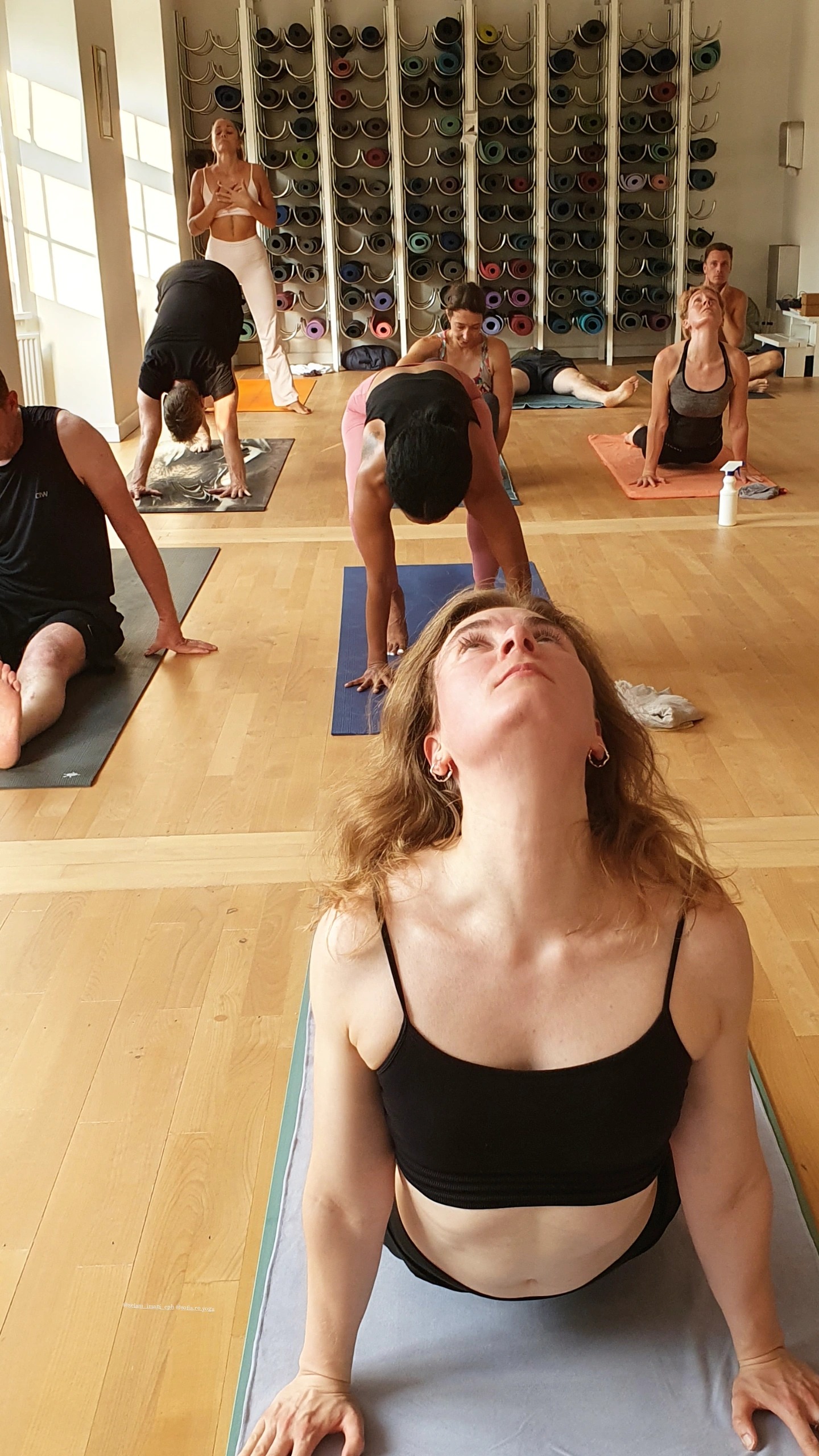
From the beginning of the Foundation, participants spend time in the regular Mysore teaching environment approximately three times a week, alongside their own practice. Here, the principles studied in the seminars are encountered in real practice: different bodies, different ways of learning, different states of attention and different individual needs. What participants do in the room develops according to their readiness.
Initially, participants spend substantial time watching. They learn to observe practitioners, recognise different bodies, practices and ways of directing attention, and understand when, how and why the teacher intervenes. They also learn to recognise when no intervention is needed and when space, quiet and continued practice are more useful than additional instruction.
Much of an assistant's work is with people who are new to the practice. Participants learn to introduce the sequence, establish breath and attention, demonstrate and explain postures, help students remember what comes next, and gradually give them enough space to practise independently. From the beginning, the student is introduced not only to what to do, but to how to practise.
Working with real people means meeting different bodies, personalities, abilities, differences in body awareness and ways of learning. Under supervision, participants develop the observation, communication, presence and judgement needed to respond to the person in front of them. They learn to use words, demonstration, tactile guidance and sometimes simply space and silence to help the practitioner become more aware and increasingly able to experience the practice from within. Hands-on assisting is one part of this work, but not its main focus.
As understanding, awareness and teaching ability develop, participants are trusted with increasingly complex situations, always within the boundaries of their competence and with an experienced teacher present. Greater responsibility requires not only greater technical knowledge, but greater attention, judgement and sensitivity to the practitioner and the room as a whole.
How study and practice connect
Participants might study observation, body mechanics, communication, awareness or assisting during a weekend seminar. In the weeks that follow, they observe these principles in actual Mysore classes and begin applying them under supervision. Their experience in the room, including what worked, what did not and what they observed in themselves and the practitioner, then becomes material for reflection, discussion and further study at the next seminar.
Seminar weekend
In the Mysore room
Under supervision
Reflect on what happened
Next seminar weekend
Stage two, optional, following the Foundation
A further twelve months for selected participants, with the emphasis shifting toward practical apprenticeship and greater responsibility in the Mysore room. The aim is to deepen both the practical craft of teaching and the ability to create and support the conditions for concentrated, aware and independent practice.
Admission is not automatic. It is based on personal practice, understanding, awareness, reliability, communication, commitment and readiness demonstrated during the Foundation.
Regular presence in the Mysore room, assisting under supervision, observing how practitioners work with body, breath and attention, and discussing individual practitioners and teaching decisions.
Increasing responsibility for practitioners, beginners, individualisation, verbal instruction, tactile guidance and supporting the development of independent and inwardly focused practice.
Responsibility for sections of the Mysore room, and eventually selected sessions, while the senior teacher remains present and supervises. Participants learn to hold the room as a whole while allowing each practitioner the space and attention required for their own individual practice.
Increasing responsibility for complete Mysore sessions, combined with mentoring, feedback and assessment of readiness to teach independently. This includes the ability to teach the practical method while maintaining an environment that supports attention, awareness, concentration and the inward dimension of practice.
Completing twelve months does not automatically mean someone is ready to teach independently. Readiness depends on personal practice, understanding, awareness, judgement and demonstrated teaching competence, not simply accumulated hours.
Who the Academy is for
Intended for practitioners who want to deepen their understanding of the Mysore method, and who may in time develop toward assisting and teaching it.
Participants do not need to practise the complete Primary Series or be advanced practitioners. What matters is an established and committed Ashtanga practice, together with the experience, motivation and readiness to engage seriously with the programme.
Origins and purpose
I created the AYF Assisting Academy because Mysore teaching contains a great deal that cannot be learned from a course, a manual or a set of techniques. Knowing how to adjust, demonstrate or explain a posture is only part of teaching. At a deeper level, teaching is about helping people connect with themselves, become more present and aware, and gradually allow yoga to become part of how they experience themselves and their lives. This also requires the skill of discernment, and discernment develops through experience. Over time, you learn when and how to interact with a student, how much to do, what the person in front of you needs, and when it is better not to intervene at all, allowing the practitioner the space to experience, investigate and let the practice itself do the work.
I have been teaching Ashtanga for almost twenty years, and much of what I know has developed through my own teachers, my personal practice and thousands of hours working with practitioners in the Mysore room. It has also developed through trying, making mistakes, observing the results, learning from them and gradually refining my teaching. Teaching experience is not simply accumulated time. It is accumulated learning.
The Academy is my way of passing on that accumulated experience and helping other practitioners develop their own teaching with greater understanding and discernment. The aim is not to reproduce my way of teaching or provide a fixed set of answers, but to give participants access to knowledge that has developed through decades of practice and teaching, and the opportunity to test and develop that knowledge themselves through supervised work with real practitioners.
A living tradition survives because people practise it, experience it, understand it and eventually learn to transmit it. The seminars provide knowledge and practical tools. The Mysore room provides the apprenticeship. Together, they create a path from personal practice toward the responsibility of guiding others.
A separate path
The AYF Assisting Academy is not an authorisation programme, and completing it does not confer authorisation to teach Ashtanga Yoga. Authorisation within the tradition is granted separately through Sharath Yoga Centre (SYC) in Mysore, India.
For practitioners who wish to pursue that path, the Academy can complement continued study in Mysore through regular practice, study, observation, assisting and mentorship. Becoming a teacher or seeking authorisation, however, does not have to be the goal of every participant.
If you would like to learn more about the authorisation process and the requirements for becoming an authorised Ashtanga Yoga teacher, you can read more on the official Sharath Yoga Centre website.
Programme Fee
February–June 2027
The programme fee includes:
A natural part of the education is that participants are expected to maintain and develop their own practice alongside their study, observation and assisting.
Participants who successfully complete the six-month Foundation will receive a Diploma. Successful completion requires regular participation and demonstrated competence, understanding, commitment and readiness in both the study and practical apprenticeship.
The Diploma is therefore not awarded simply for attendance or completion of the required hours. It is awarded when the participant has demonstrated a level of understanding and practical ability that the Academy can confidently stand behind.
The Diploma documents successful completion of the programme but does not constitute official authorisation or certification to teach Ashtanga Yoga. Only Sharath Yoga Centre in Mysore can grant official authorisation or certification to teach Ashtanga Yoga.
Suggested payment schedule:
This fee applies to the six-month Foundation. Pricing for the subsequent twelve-month Extended Apprenticeship has not yet been published.
How to apply
If you can see yourself in this programme and would like to explore whether AYF Assisting Academy is right for you, we invite you to apply.
Send us a short email telling us a little about yourself, your Ashtanga practice and experience, and why you are interested in the Academy.
From there, we will have a conversation about your practice, your motivation and what you hope to gain from the programme, so that together we can determine whether the Academy is the right fit.
Apply to the Academy
Send us a short email about yourself and your practice, and we'll take it from there.